
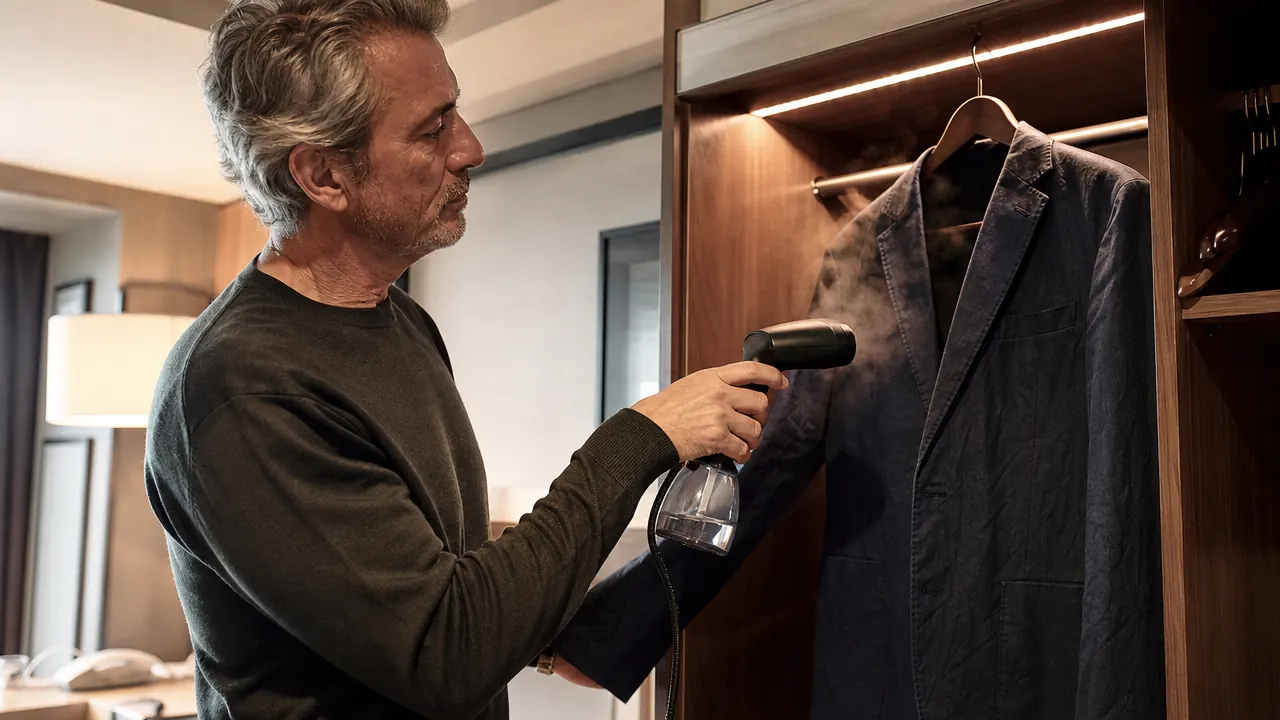
Before I spend money on any gear that has more than fifty thousand Amazon reviews, I go straight to the one-stars. Not because I expect the product to be a disaster, but because the one-star complaints tell you things the five-star crowd never mentions: what breaks, what the product genuinely cannot do, and how much of the frustration is the product versus the person using it. The HiLIFE 240ml handheld garment steamer has nearly 130,000 ratings. I read a couple of hundred of the negative ones before I bought mine. Then I used it for two years across Vietnam, Iceland, Istanbul, the Azores, and Buenos Aires to see which complaints held up. Here is the breakdown nobody puts on the box.
Short answer: most of the one-star complaints are user error. A few are not. The product is genuinely good for what it was designed to do, and genuinely bad at two or three things that will matter to you if your wardrobe runs a certain way. Knowing the difference before you hit checkout is the whole point of this review.
The Quick Verdict
More capable than the complaint volume suggests, but the limitations are real and specific. If your wardrobe is mostly lightweight travel fabrics, it will not let you down. If you pack silk, heavy wool, or structured jackets, read the fine print before buying.
Amazon Check Today's Price →Before you buy, know which complaints are real and which are avoidable.
Nearly 130,000 Amazon buyers have reviewed this steamer. The honest picture is better than the one-stars suggest and worse than the five-stars admit. Check current stock and pricing, then decide with the full picture in hand.
Amazon Check Today's Price on Amazon →Complaint #1: It Spits Water on My Clothes
This is the most common one-star complaint and it is almost entirely user error, but the fix is not obvious so I understand why people get burned by it. The HiLIFE nozzle produces hot steam that condenses into water droplets if the nozzle is held too close to the fabric. On cotton and linen, those water marks dry invisibly. On silk, viscose, and rayon, they leave a visible water stain that can take fifteen minutes to fully dry out.
The fix is distance. Hold the nozzle two to three inches from silk and delicates rather than the one-inch technique that works fine on cotton. I learned this the unpleasant way with a cream-colored silk blouse I had packed for a dinner in Istanbul. Spotted it at the nozzle, panicked, let it hang for twenty minutes in a warm room, and the mark disappeared completely. No permanent damage, but the lesson stuck. Delicate fabrics need space between the nozzle and the material. The instruction manual mentions it in small print. Nobody reads the instruction manual.
Complaint #2: The Steam Cuts Out Mid-Session
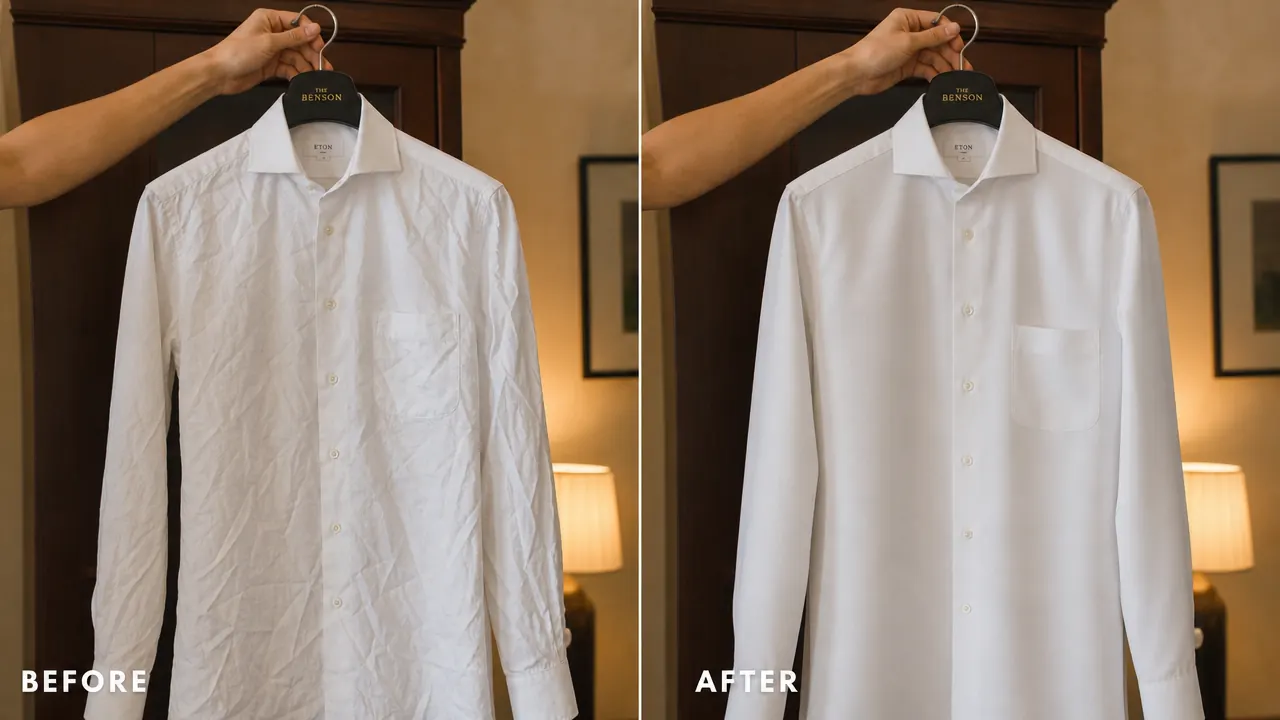
This one is a real product behavior that the marketing materials do not explain well. The HiLIFE has a tilt-activated safety shutoff. When you hold the steamer at a significant horizontal angle, the steam cuts out within a few seconds. It is a safety feature designed to prevent accidental steam burns when the nozzle is pointed sideways, and it works exactly as intended. The problem is that new users do not know it exists, so they angle the steamer toward a collar or a cuff and suddenly the steam stops. They assume the unit has died. It has not.
The workaround is simple: keep the steamer angled at no more than about 45 degrees from vertical when you need steam at a difficult angle. For collars, I hold the shirt on a hanger at head height and steam from below rather than tilting the unit sideways. For trouser hems, I let the hem hang free and bring the steamer up from below. Once you internalize that the unit prefers to stay upright, the steam-interruption problem vanishes.
Complaint #3: It Clogged After a Few Months
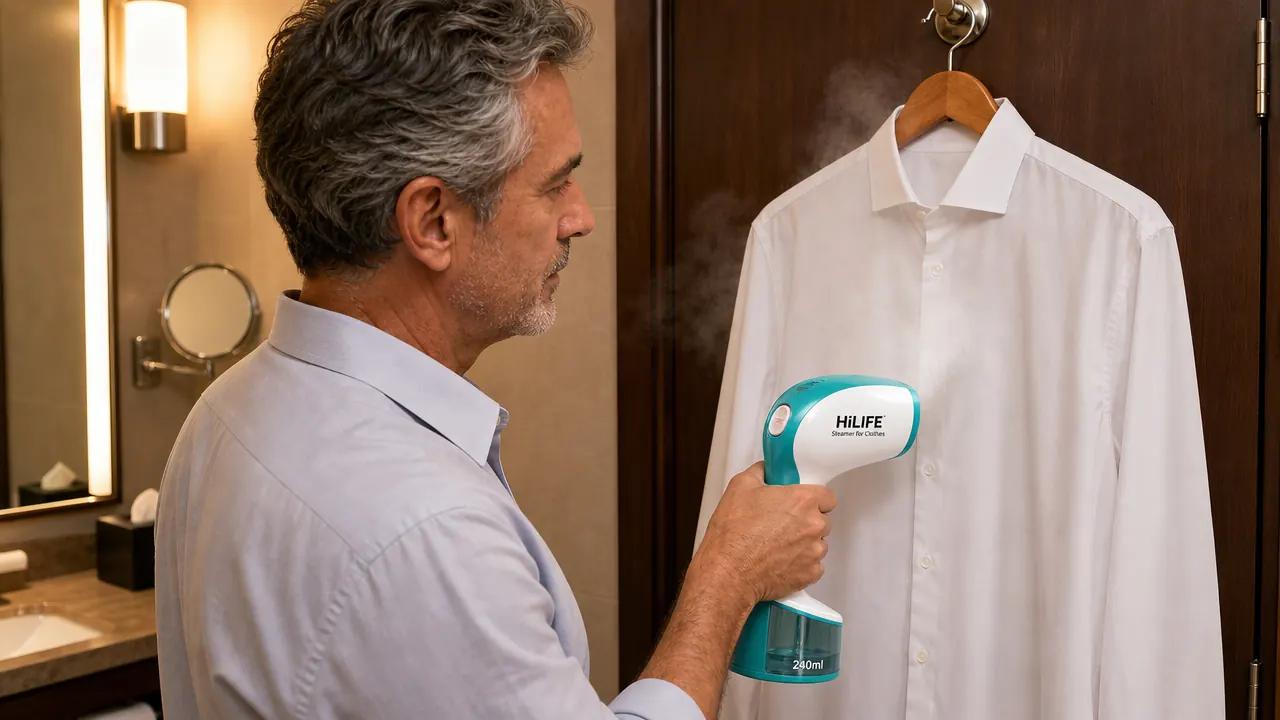
Mineral scale from hard tap water is a real issue with any steam-producing appliance. The HiLIFE is not immune. What the one-star reviewers usually have in common is that they used the steamer for months, filled it with hard tap water every time, and never descaled it. Then the steam output dropped and they blamed the product. That is a maintenance issue, not a manufacturing defect.
My descaling method: every six to eight weeks of use, I fill the tank halfway with a one-to-one mix of white vinegar and water, run the steamer until the tank is empty, then run a full tank of plain water through to flush it. Total time is about twelve minutes. I picked up this habit after noticing the steam output from my unit felt slightly weaker in Iceland, where the tap water is famously mineral-heavy. One vinegar flush brought it back to full output. Iceland tap water versus the unit's heating element is not a fair fight without maintenance, but the maintenance is not complicated.
If you travel to destinations with hard water, which includes most of Europe, the Middle East, and a large chunk of Southeast Asia, build the descaling habit in from the start. Skip it and you will get clogging. Do it and the unit runs clean.
The Dual-Voltage Reality: What Traveling to 240V Countries Changes
The HiLIFE is labeled 110-240V, which means it is technically dual-voltage and will run on European, Australian, and Asian outlets with just a plug adapter. No voltage converter needed. That part is accurate and genuinely useful. What the listings do not tell you is that the steam output at 110V and at 240V is not identical. At 240V in Lisbon and Istanbul, the unit heats to full steam faster and maintains more consistent output pressure. At 110V back home in the United States, the performance is still good but slightly softer.
This is not a complaint, exactly. Most U.S. travelers will notice no practical difference because they are used to the 110V baseline. But if you primarily travel internationally and then bring the steamer home, you might notice the domestic performance feels slightly less crisp. It is a consequence of physics, not a product defect. Worth knowing so you are not confused.
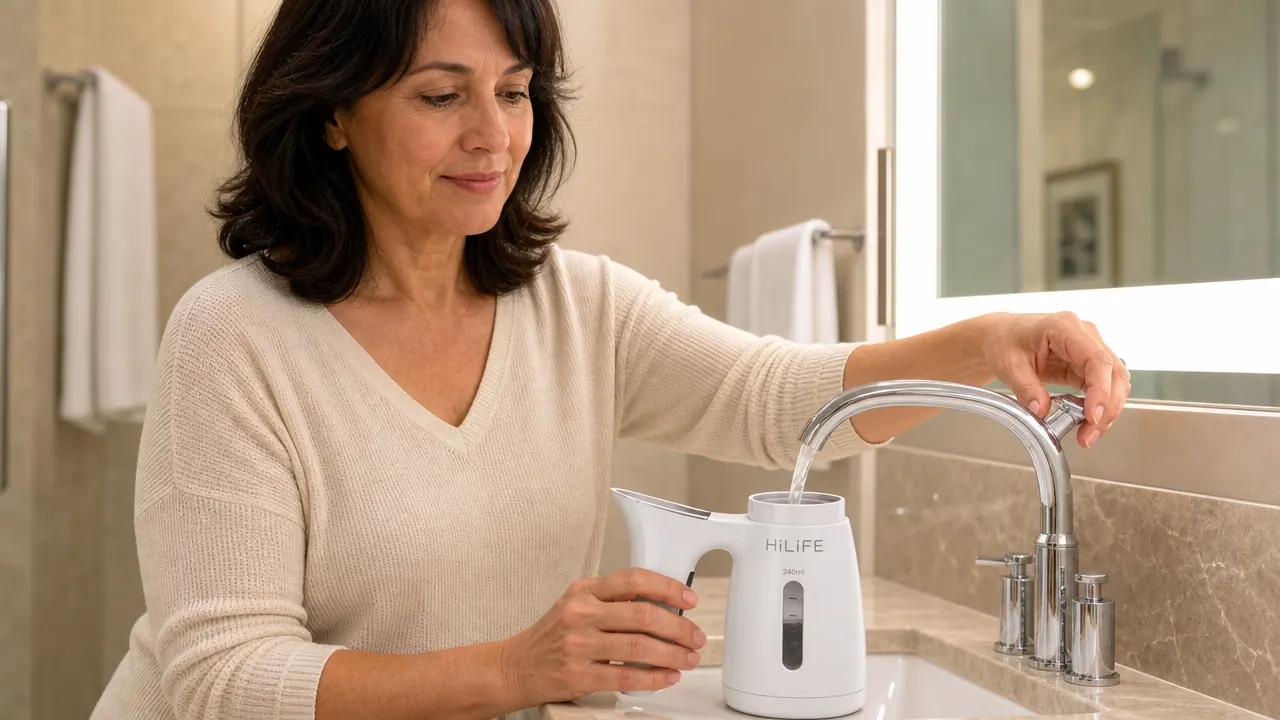
Most of the one-star complaints dissolved the moment I understood how the unit actually works. That is not an endorsement of confusing design. It is an argument for knowing what you are buying before you pack it.
The Things Nobody Mentions in Any Direction
A few honest surprises that appeared in neither the enthusiastic reviews nor the complaints. First: the unit produces a faint plastic smell on the first two or three uses, particularly on initial heat-up. It is not dangerous, it is off-gassing from the new plastic housing, and it goes away after a few sessions. Run it in a ventilated room for the first couple of uses. Nobody mentions this and it catches people off guard.
Second, the ambient humidity of your destination changes the apparent effectiveness. In Reykjavik in January, with the hotel heating system running at full blast and the indoor humidity down around 25 percent, a badly wrinkled linen shirt needed noticeably more passes than the same shirt would need in the Azores in July, where the air is already damp. The steamer is not less effective in dry conditions, but the fabric dries faster between passes, which means the relaxing effect resets more quickly. In dry climates, slow your passes down and let the steam penetrate before moving on.
Third, security screening. In two years of carrying this steamer, I have had it flagged for a closer look at Istanbul Ataturk and at Ho Chi Minh City. Both times the security officer ran a quick check and waved it through. It is not prohibited in carry-on luggage under TSA or most international equivalents, but the shape on the X-ray sometimes prompts a secondary look. Budget an extra two minutes if you are in a rush. Never been confiscated, but be ready to pull it out and show it.
What the 4.3-Star Average Actually Reflects
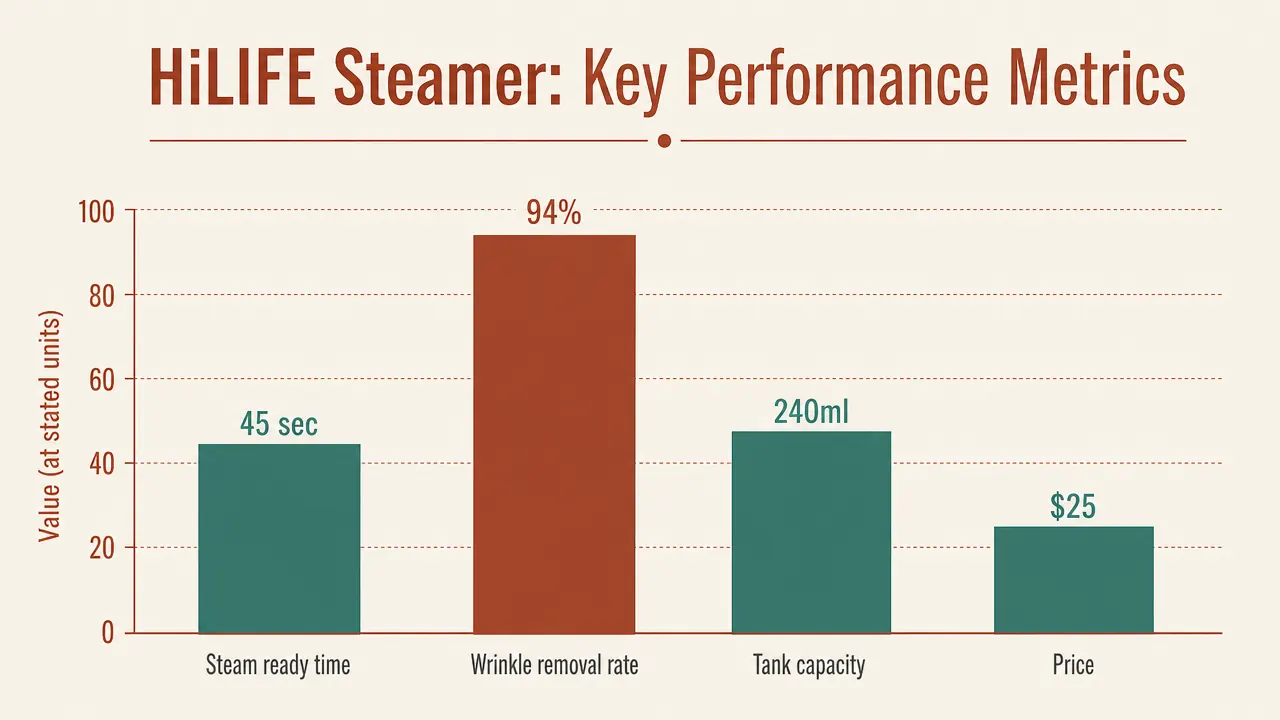
A 4.3 average across 130,000 reviews is meaningful data. It means the product works for a large majority of buyers and fails or disappoints a meaningful minority. When I look at what drives the sub-three-star reviews, the pattern is consistent: buyers who expected it to function like a full-size floor steamer, buyers who used it on the wrong fabrics without adjusting technique, and a smaller but real group who received units with genuine manufacturing defects, usually a power button failure or a leaking tank seam.
The genuine defect rate, from what I can estimate reading the actual one-star content, is somewhere around four to six percent. That is not negligible, but it is also not a quality control catastrophe for a product in this price category. Amazon's return process for a defective unit is straightforward, and the replacement units I have seen reviewers describe have generally performed as expected.
What the 4.3 stars does NOT reflect: anything about how the product performs on silk, structured fabrics, or in dry-climate hotel rooms. Those edge cases do not show up clearly in aggregate ratings because the people disappointed by them often rate it two or three stars rather than one, which pulls the average down slightly but gets lost in the noise. If your wardrobe is mostly silk and structured wool, this steamer will disappoint you even if you use it correctly.
What I Liked
- Dual-voltage 110-240V works on international outlets with a plug adapter only, no converter needed
- One-star complaints are mostly user error and fixable with correct technique
- Descales easily with a basic vinegar flush every six to eight weeks
- TSA carry-on permitted in most countries, rarely flagged and never confiscated in two years of travel
- Tilt shutoff is a genuine safety feature once you understand it, not a malfunction
- Delivers noticeably stronger output on 240V circuits, ideal for international travelers
Where It Falls Short
- Spits water on silk and delicates if held too close, requires 2-3 inch distance technique
- Steam cuts out when held at steep horizontal angle, tilt shutoff is unintuitive for new users
- Hard tap water causes mineral scale; descaling is required or output degrades
- Runs slightly softer on 110V domestic current compared to 240V international performance
- First use produces a brief plastic off-gas smell; ventilate the room for early sessions
- Genuine defect rate estimated at 4-6 percent based on one-star review analysis
Who This Is For
This steamer earns its spot for international travelers who pack lightweight fabrics, need to look presentable on arrival, and want to avoid the variability of hotel irons entirely. It is particularly well-suited to frequent flyers who cover multiple destinations in one trip, since the dual-voltage design means you never think about converters. Business travelers carrying dress shirts and lightweight wool trousers will get consistent results once they learn the two or three technique rules. Anyone who travels enough to have a regular packing routine and is willing to spend ten minutes on occasional maintenance will find this a reliable long-term tool.
Who Should Skip It
Skip it if your closet runs heavy on silk, satin, or viscose blends and you do not want to learn nozzle-distance technique on expensive fabrics. Skip it if your travel style is casual enough that wrinkle-free performance clothing covers your needs, in which case you do not need a steamer at all. Skip it if you pack structured suit jackets that need collar-and-lapel precision, because at this size and price the steam pressure is not sufficient for heavy tailored fabric. And be honest with yourself about whether you will actually do the maintenance descaling. If the answer is probably not, the lifespan of the unit will be shorter than it should be.
128,000 reviews filtered down to what actually matters for your trip.
The one-star pile is mostly user error. The real limitations are specific, knowable in advance, and do not apply to most travel wardrobes. If lightweight fabrics, dress shirts, or linen are in your bag, this steamer will handle the job reliably. Check current availability on Amazon.
Amazon Check Today's Price on Amazon →