
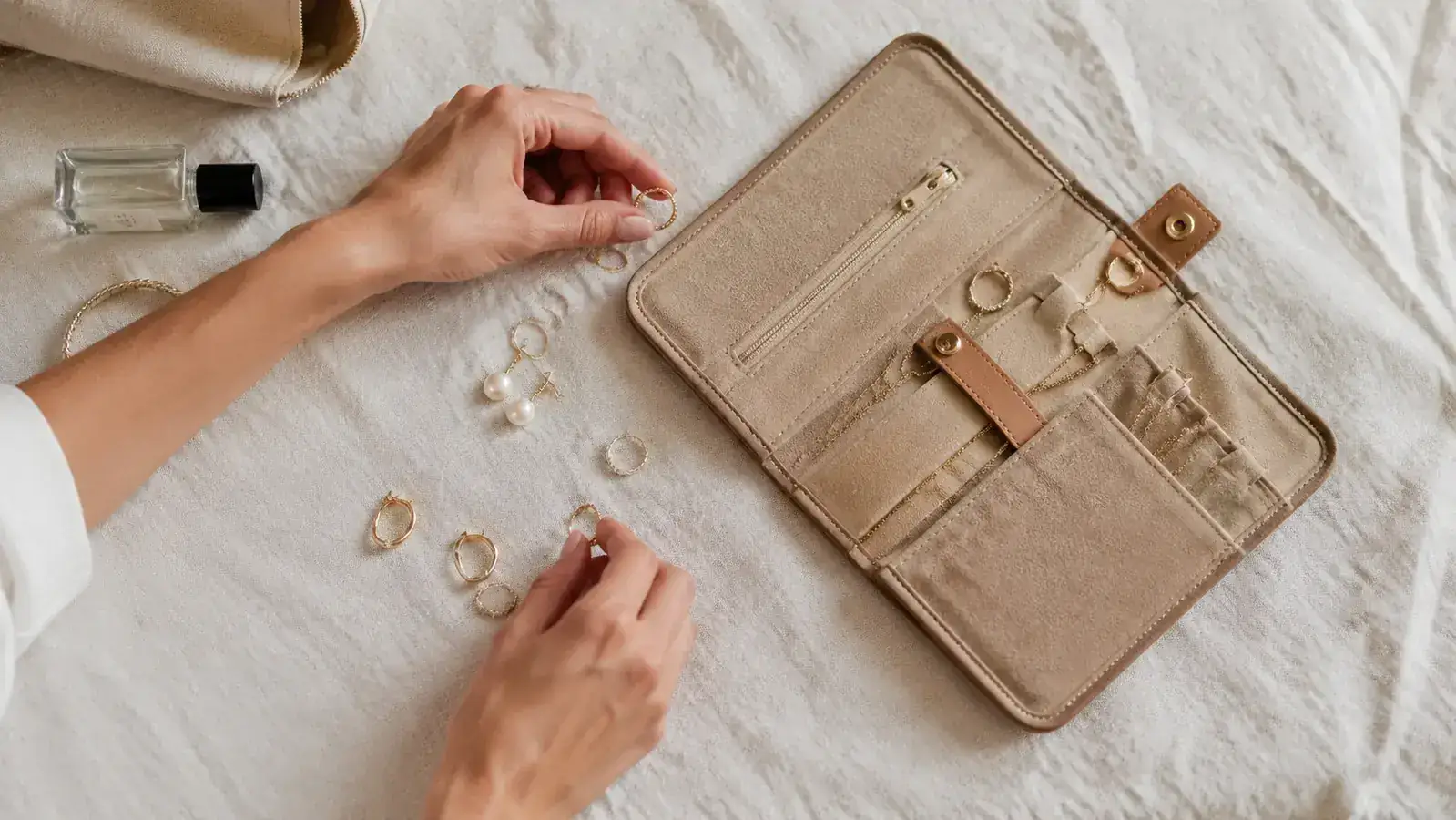
I have pulled a tangled knot of necklaces out of a toiletry bag at 6 a.m. in a Nairobi hotel room, trying to separate a thin gold chain from a beaded bracelet with my reading glasses in one hand and a boarding pass in the other. If you have been there, you know the feeling. It is not a packing problem. It is a system problem. You stuffed things in a zip pocket and hoped for the best, and the jewelry did what jewelry always does when given the chance: it found every other piece and tied itself to it.
After years of motorcycle trips across Europe and sailboat passages where bag space is genuinely finite, I settled on a method that works regardless of how long the trip is or how many pieces I am bringing. The anchor of that method is the BAGSMART Travel Jewelry Organizer, a compact foldable roll that costs less than a round of drinks and has 14,260 reviews at a 4.7-star rating on Amazon. But the product is only part of it. The packing order, what you leave behind, and how you secure individual pieces before they go in the bag matter just as much. Here is the full system.
Stop untangling necklaces at 6 a.m. in a foreign hotel room.
The BAGSMART travel jewelry roll has dedicated slots for necklaces, rings, earrings, and bracelets. Folds to the size of a paperback. Over 14,000 travelers rated it 4.7 stars.
Amazon Check Today's Price on Amazon →Step 1: Edit Before You Pack
The first mistake is treating jewelry packing as a containment problem. The real problem is selection. Most people grab everything they might want and sort it out later. That is the shortest path to a tangled mess and at least one lost earring back. Before you touch a single piece, lay everything out on a flat surface and cut the pile in half.
I travel with a rule I call the three-occasion test. Each piece has to cover at least three different settings on the trip: casual day out, a nicer dinner, and something in between. A simple gold necklace passes. A statement chandelier earring that only works with one outfit probably does not. This edit alone solves 80 percent of the volume problem before you start packing.
Once you have the edited pile, group by type: necklaces together, rings together, earrings paired and together, bracelets together. Grouping before packing means you load the organizer in one pass instead of hunting around your jewelry box in a hurry the morning you leave.
Step 2: Protect Necklaces Before Anything Else
Necklaces are the high-maintenance items in any travel jewelry kit. A fine chain will find a tangle partner in any nearby piece given even a short stretch of road vibration or turbulence. There are two methods that actually work, and which one you choose depends on how delicate the chain is.
For thin, light chains, thread each one through a drinking straw before clasping it. The straw keeps the chain rigid and separated. It sounds ridiculous until you open your bag at the other end and everything is exactly where you left it. For heavier statement necklaces, wrap each one in a small square of anti-tarnish tissue or a soft microfiber cloth before coiling it. The cloth keeps the finish and prevents scratching against harder pieces.
Once each necklace is prepped, it goes into a dedicated necklace sleeve or pocket in the organizer. The BAGSMART roll has two clear zip pockets specifically sized for this. Each necklace gets its own pocket. Never two chains in one compartment, no matter how much space looks like it is there.
Step 3: Secure Earrings and Small Pieces First, Not Last
Small pieces have a way of disappearing in transit. Earring backs are the worst offenders. The problem is almost always the same: small items get packed last, in a hurry, into whatever space is left. They end up loose in a pocket, rattle around, and by the time you arrive one backing is somewhere between the airport terminal and seat 24B.
The fix is to pack small pieces first, not last. Before you load necklaces or bulkier bracelets, get the earrings secured. Stud earrings belong in a fabric loop section, one pair per loop. If your organizer does not have those loops, push each pair through a strip of foam or a small button card (the kind that comes pinned to new dress shirts). The physical card holds the post and the back together so neither can separate in transit.
For hoops and drop earrings, pair them and clip or pin each pair together before they go in. A tiny rubber band around the paired wires works. This takes an extra fifteen seconds per pair at home and saves you ten minutes of searching at the other end.
Step 4: Load the Organizer in a Specific Order
How you load the organizer determines whether you can get to what you need without unpacking the whole thing. I load in reverse-use order: the pieces I am most likely to need first go in last, so they are on top or in the outermost pocket when I open the roll at the hotel.
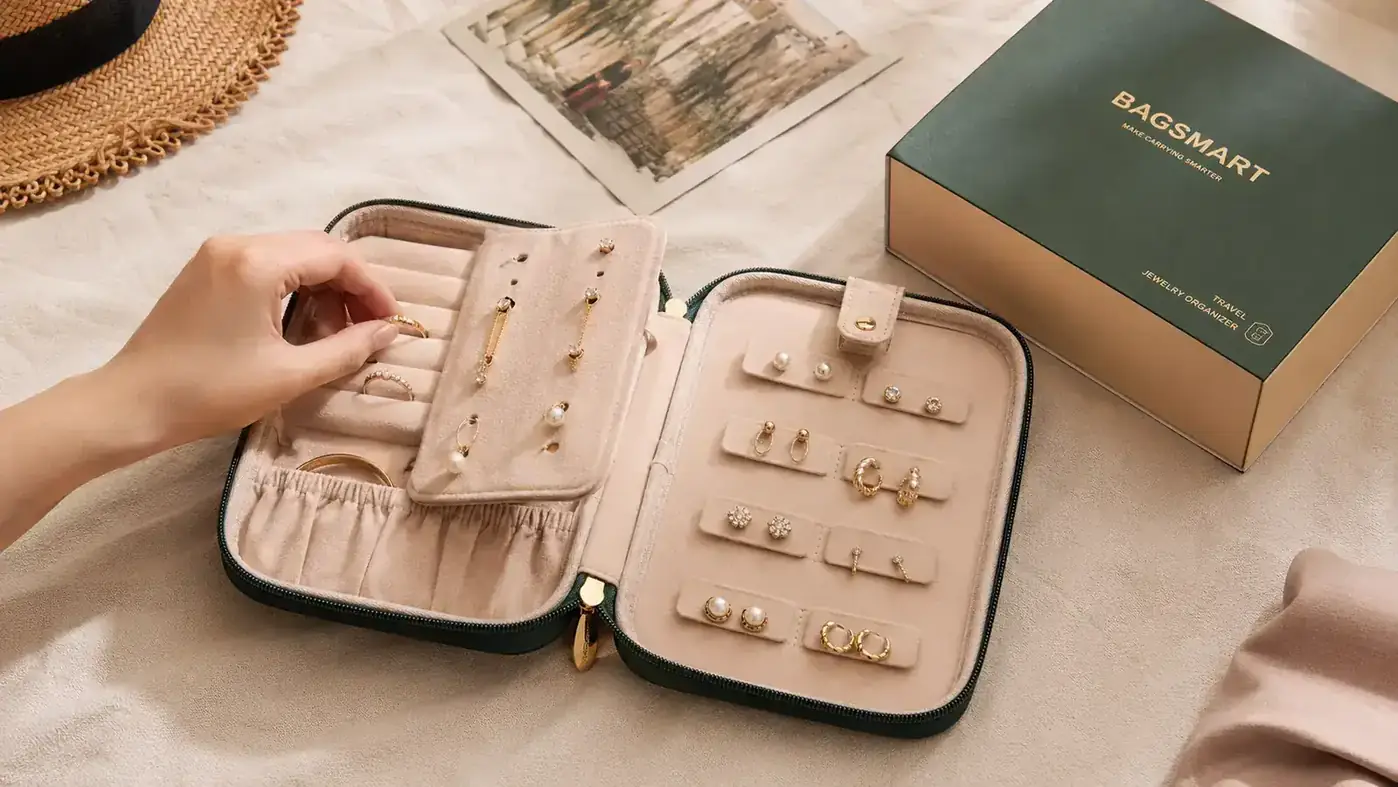
Rings go into snap or zippered ring roll sections first, since I usually only need them at the start and end of a trip. Earrings for day one go into the most accessible section. The necklace I am likely to wear most often goes into the top clear pocket. Bracelets and backup pieces fill whatever remains. If a piece is a maybe, it goes in last and gets removed from the bag before you zip it. A maybe piece left in the organizer is a tangle risk and dead weight.
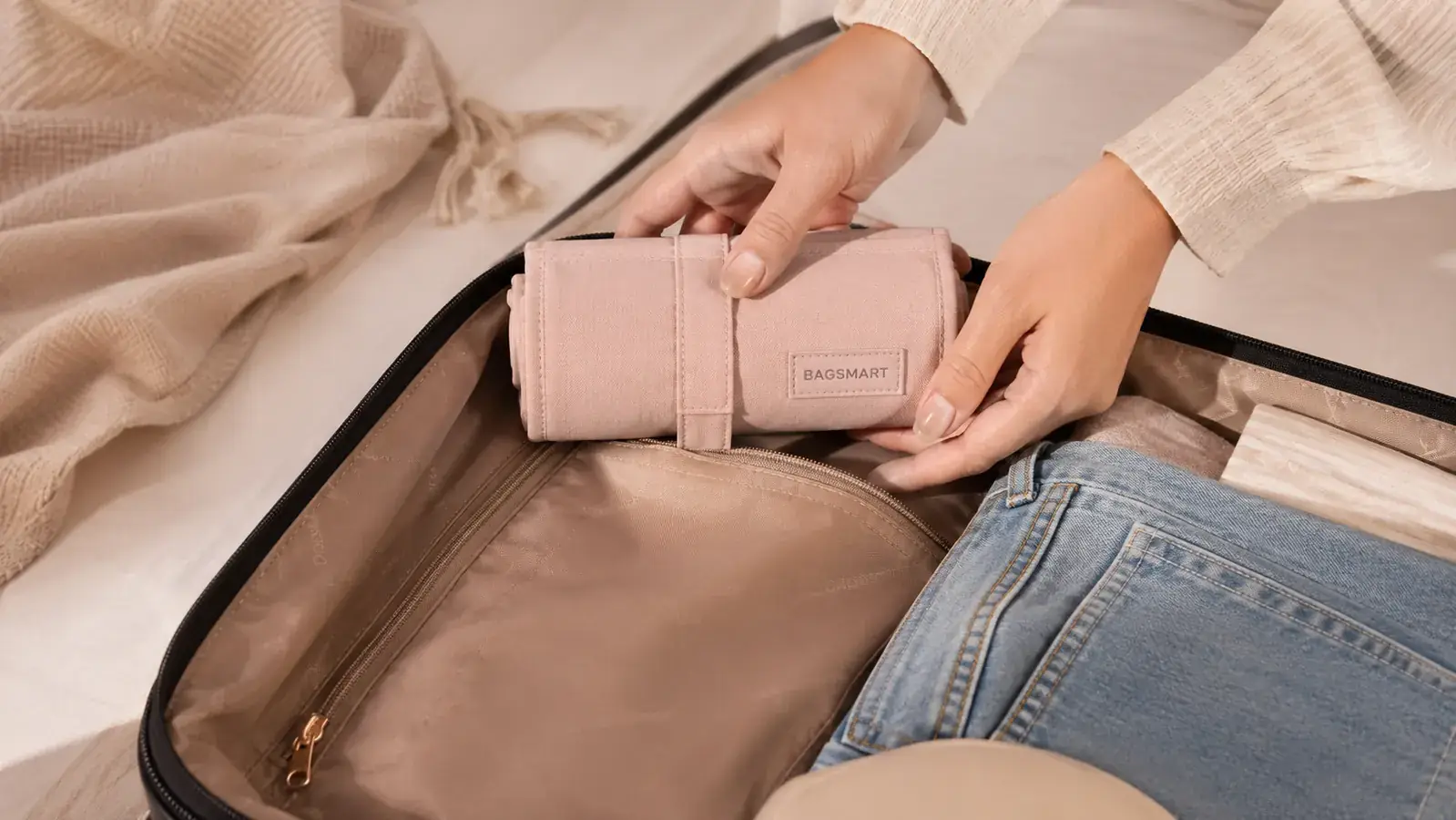
The BAGSMART roll folds into a compact rectangle about the size of a thick paperback once loaded. That size matters on a sailboat or a motorcycle tour, where bag packing is real geometry. It fits in a carry-on side pocket, a day bag, or the front zip section of a duffel without taking space the other gear needs.
Step 5: Store It Where You Won't Forget It
Lost jewelry is rarely lost in transit. It is left on a nightstand, a bathroom counter, or the edge of a hotel sink. The most dangerous moment for a ring or a bracelet is not inside the bag. It is the thirty seconds between taking it off at night and putting it somewhere intentional.
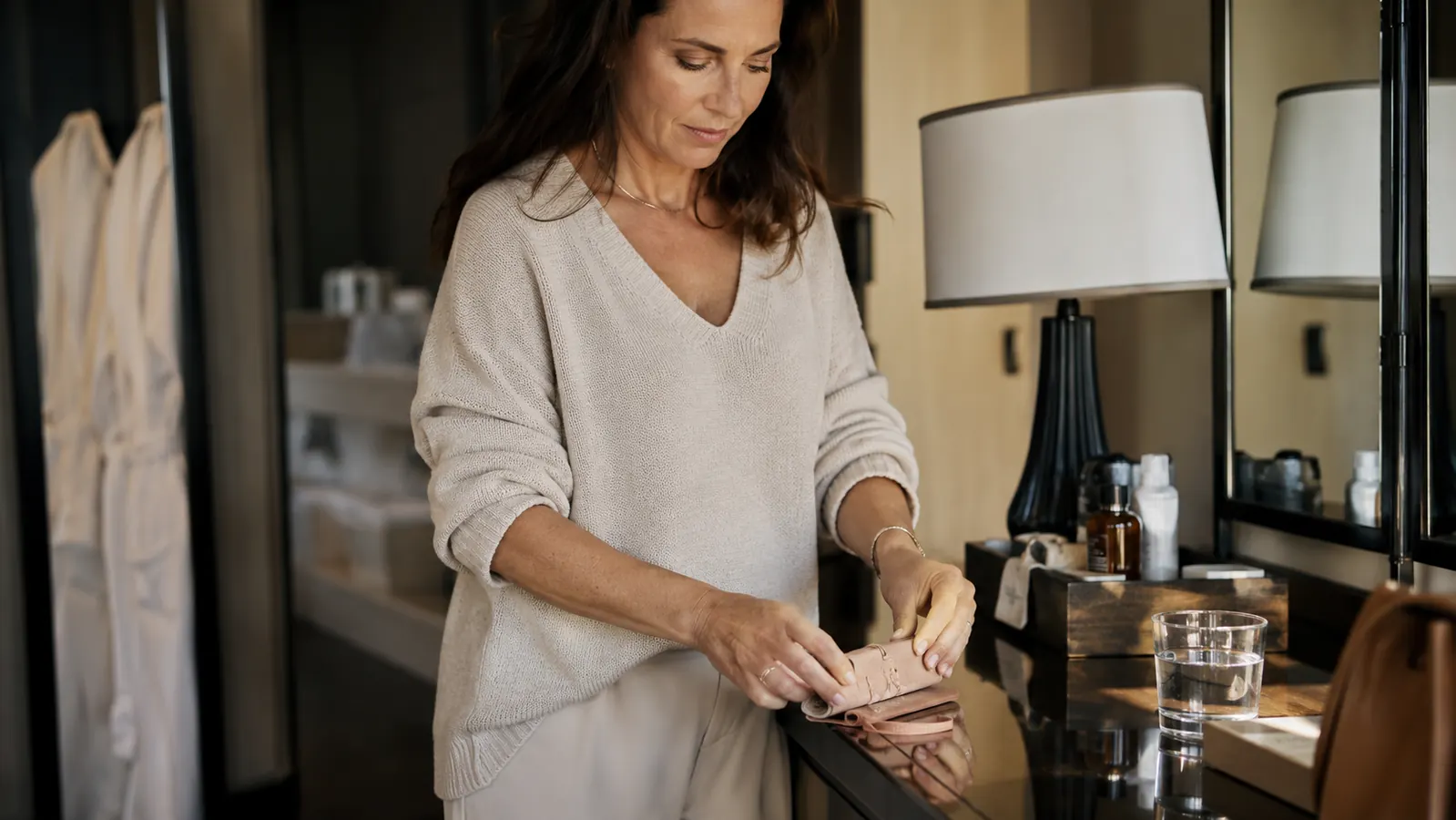
When I check into a room, the jewelry organizer comes out of the bag and goes onto the desk or dresser immediately. Not later. Not after I unpack clothes. First thing. The roll, open, becomes the landing zone for everything I take off during the stay. Ring comes off, it goes into the ring section. Earrings at the end of the night go back into their loop. The organizer stays open on the surface until the morning I check out, when everything goes back in before anything else gets packed. This habit is the reason I have not left a piece behind in years.
If you are in a room with a small safe, put the organizer in the safe when you leave during the day. If not, tuck it into your carry-on or day bag, not loose in the room. A folded jewelry roll zips shut and has nothing to spill. It is the most secure form the jewelry can take outside of a vault.
What Else Helps
A few things complement this system and are worth knowing. Anti-tarnish strips placed inside the organizer's zip pockets slow tarnishing on silver pieces, which matters on long trips or in humid climates. A single small microfiber cloth tucked into the roll lets you buff pieces at the destination without searching for something clean. For travelers who bring watches, a separate watch roll is the right call. Watches are heavy and the clasps can scratch softer metals if they share a compartment, so they deserve their own dedicated space. Finally, photograph your jewelry before you leave. Not for insurance paperwork, though that is useful too, but because a photo of the pieces you packed makes it easy to do a quick checklist when packing to go home. If you traveled with it, it should be in the photo. If it is not in the organizer, it should be in the photo. That thirty-second check has saved me twice.
Lost jewelry is rarely lost in transit. It is left on a nightstand at checkout because nobody built a landing zone for it at check-in. The organizer is the landing zone.
The organizer that makes this whole system work is under sixteen dollars.
The BAGSMART foldable jewelry roll fits necklaces, rings, earrings, and bracelets in dedicated slots, folds to carry-on size, and has 14,000-plus real reviews backing it up. Worth every penny before a single trip.
Amazon Check Today's Price on Amazon →