
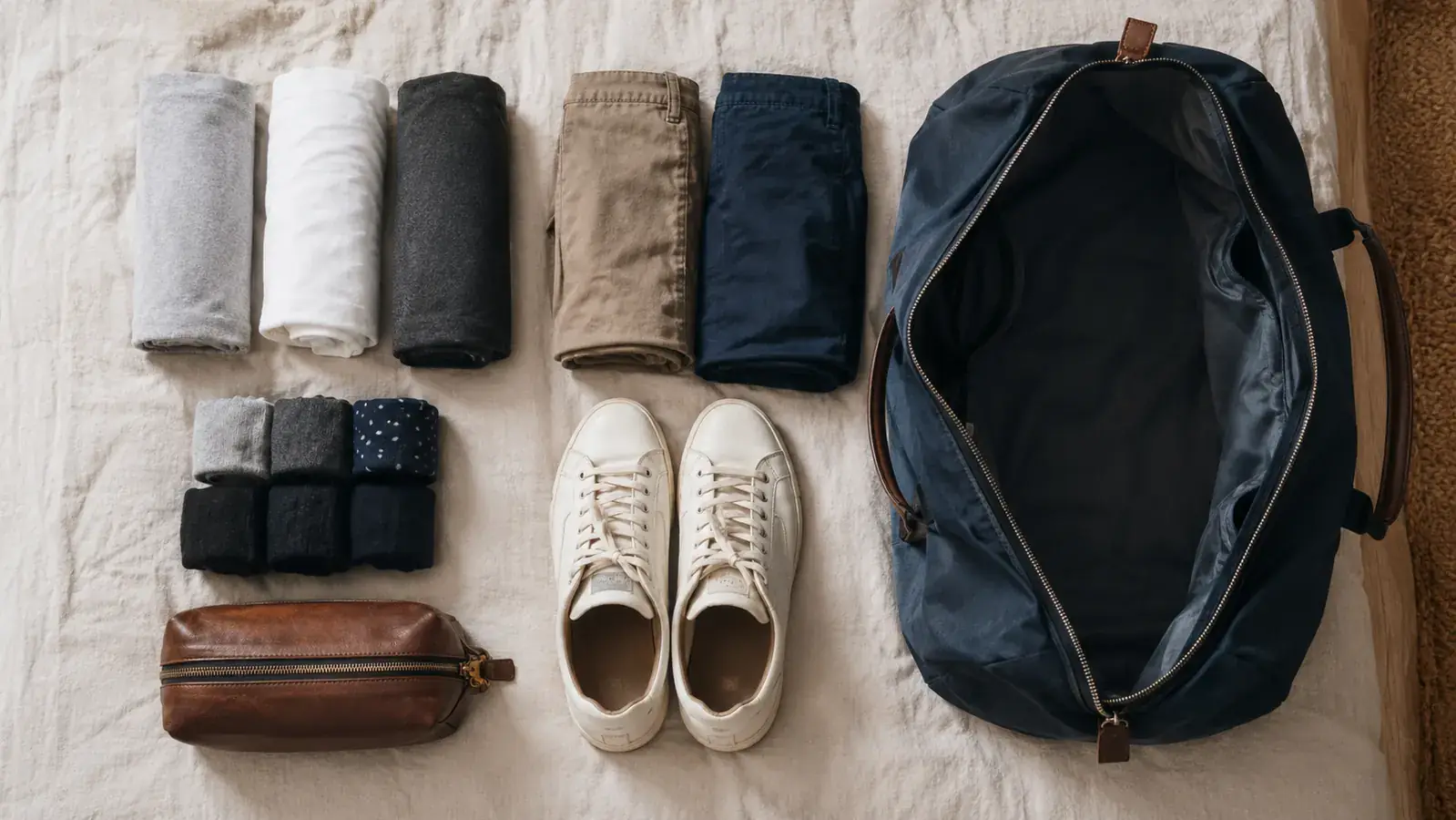
Most people who tell me they 'have to' check a bag have never actually tried not to. I used to be one of them. Four days meant a 26-inch roller, an extra fee at the counter, and 25 minutes standing at baggage claim watching other people's stuff go by before mine showed up. Then I missed a connection in Denver because of it. That was six years ago, and it was the last time I checked a bag.
Here's what nobody tells you: four days of clothes, shoes, and gear fits comfortably in a single carry-on duffel if you pack in the right order with the right bag. I've run this system from Reykjavik to Chiang Mai, from a long weekend in Savannah to a four-day sail delivery in the BVIs. The bag is the Gonex Large Foldable Travel Duffle with its dedicated shoe compartment, rated 4.6 stars across nearly 14,000 reviews. The system is what follows.
Tired of paying checked-bag fees for a four-day trip? This is the duffel that fixes it.
The Gonex packable duffel holds a full four-day load, has a separate shoe pocket so your clothes stay clean, and collapses into its own pocket when you're done. Over 13,900 travelers have rated it 4.6 stars. Check today's price before your next trip.
Amazon Check Today's Price on Amazon →Step 1: Pick Only One Pair of Shoes Plus What's on Your Feet
Shoes kill more carry-on attempts than anything else. They're bulky, they don't compress, and people always want to bring three pairs. For four days, you need one pair of shoes in your bag and one on your feet. Full stop. That's two total. The pair you travel in should be the most versatile one, meaning it can handle a dinner out, a long walk, and a rainy morning without looking wrong for any of them. Neutral trail runners or a clean leather sneaker usually work.
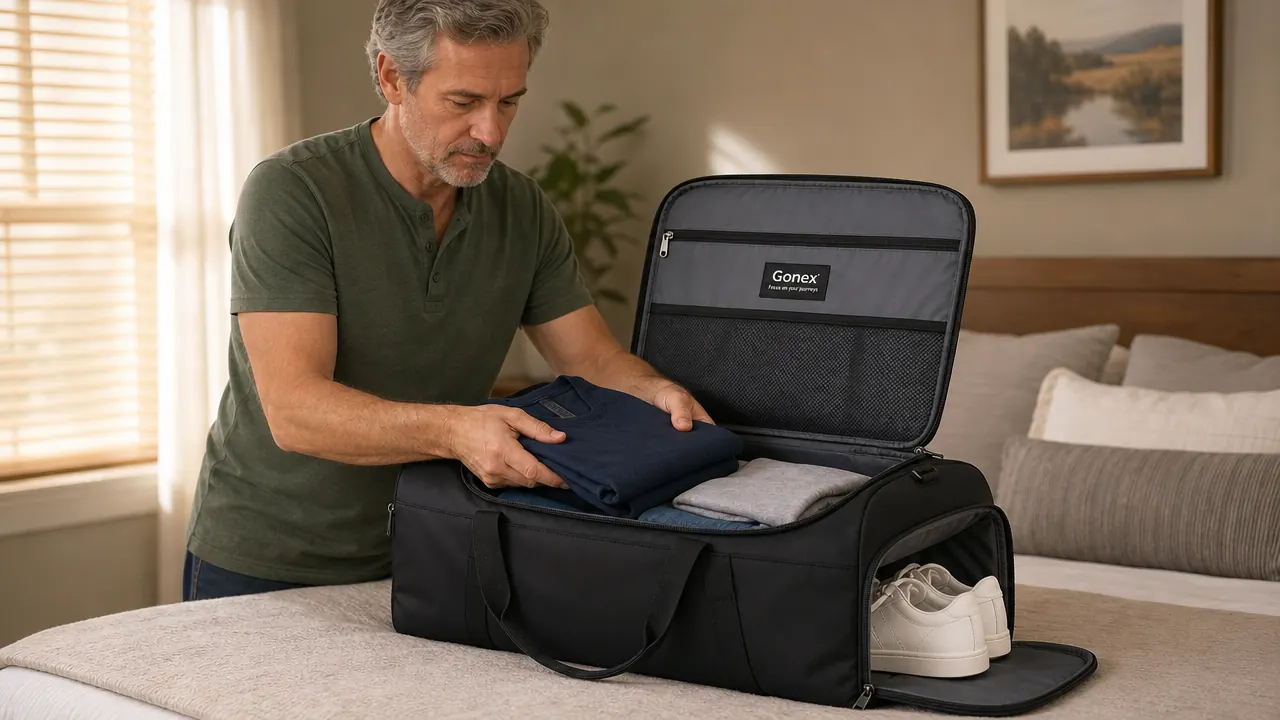
The Gonex duffel has a zippered shoe compartment at the bottom that fits a men's size 11 sneaker without issue. I tested it with a pair of Merrell trail runners before I trusted this claim, and they dropped in with room to spare. That compartment keeps shoe dirt and rubber off your shirts, which matters more than people think. Slide your travel-day shoes in there when you land so your bag is ready to collapse and pack on the way home. Never put shoes loose in the main cavity.
If your trip includes a specific activity requiring dedicated footwear, like formal shoes for a wedding or water shoes for a boat trip, plan to wear the versatile pair onto the plane and pack the specialized pair. Still two total. The moment you hit three pairs, you've crossed from carry-on into checked bag territory and no amount of packing tricks will save you.
Step 2: Build Your Clothing List Around One Color System
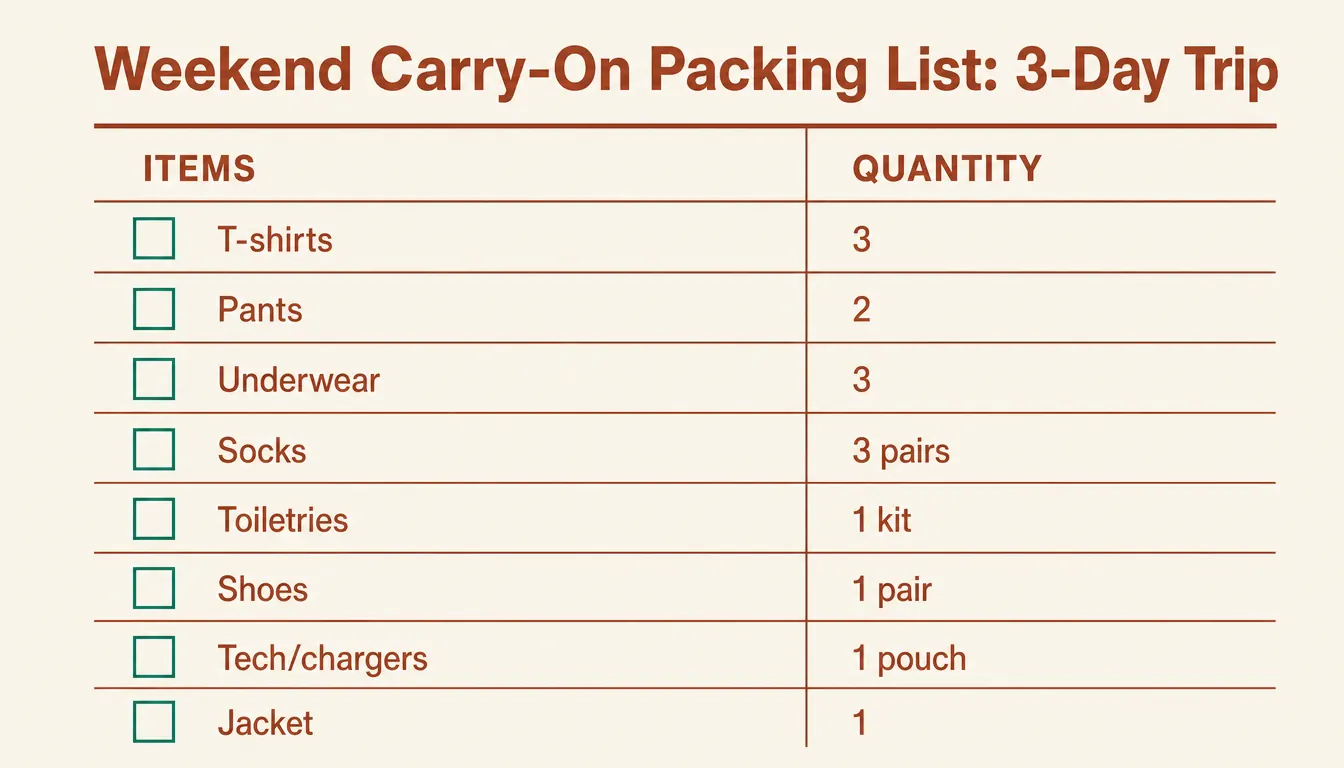
Four days means four outfits, but not necessarily eight pieces of clothing. A color system means everything mixes and matches, which cuts your clothing count without cutting your options. My standard four-day list is: four tees or casual shirts in neutral tones, one pair of pants that works for dinner and a walk, one pair of shorts or chinos, a light layer like a merino zip or thin jacket, and the outfit you're wearing. That's seven pieces covering four full days with mix-and-match flexibility.
Roll everything that rolls. T-shirts, shorts, and socks pack tighter rolled than folded, and they wrinkle less on the roll. Pants fold flat once, then go in last. Merino wool is worth every penny for travel because one merino tee can go three days without smelling like it did. If you're doing any layover-day walking, pack two merino tees and you can reclaim a full slot. I've gone four days in warm climates with three tees, two pairs of pants, one light layer, and zero regret.
With clothing rolled and color-coordinated, you're looking at a clothing bundle roughly the size of a large dictionary. That stack goes into the main cavity of the Gonex after the shoes are already in the bottom compartment. The main cavity on the large size runs 40 liters, which sounds abstract until you see seven rolled clothing items disappear into it with space to spare. That remaining space is where the rest of your trip lives.
Step 3: Handle Toiletries Like TSA Is Watching
If you're flying carry-on only, the 3-1-1 rule is not negotiable. Liquids in containers of 3.4 ounces or less, all in one quart-sized clear bag, one bag per person. I've watched people get pulled out of the security line with a full-size shampoo bottle and a look of genuine surprise on their face. Don't be that person, especially when you're already cutting it close at the gate.
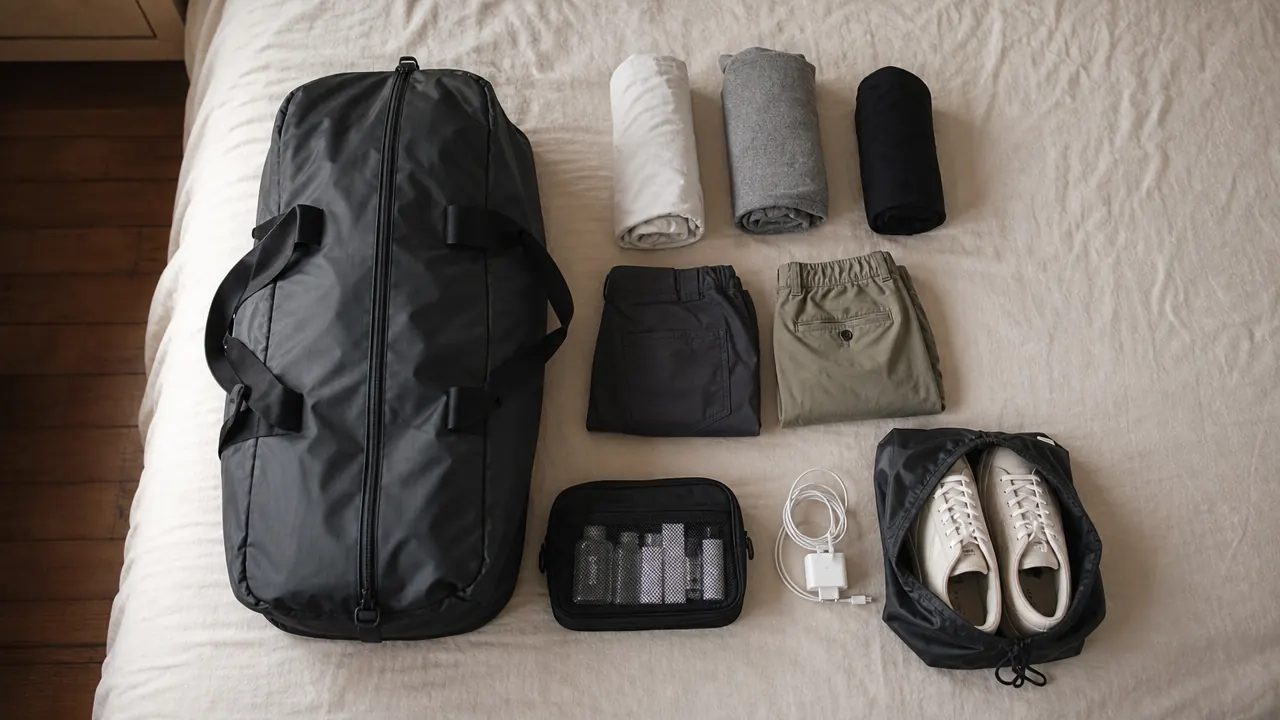
The practical answer is solid or travel-size everything. Solid shampoo bars, toothpaste tabs, a stick deodorant, and a small moisturizer in a 1-ounce tin cover most trips without touching the liquid limit. If you need a specific liquid product, decant it into a 2-ounce bottle at home. I carry a flat zippered toiletry pouch rather than a hanging organizer because it lays flat in the duffel without creating dead air space. The whole kit weighs under a pound and takes up about the same space as a thick paperback.
One more detail that saves time: pull your quart bag out of your duffel before you get to the security checkpoint. Most duffels, including the Gonex, have a front zip pocket that's perfect for toiletries and documents because it's fast to access. I keep my 3-1-1 bag and my passport there every flight so I'm not digging through clothes at the bin. That front pocket also handles your boarding pass, earbuds, and phone cable without making you reopen the main compartment.
Step 4: Pack Electronics Without the Cable Nest
Electronics are the second biggest space-waster after bad shoe planning. Most people bring too many cables, redundant chargers, and gear they never use. For four days, I carry a single USB-C cable, a compact dual-port wall charger, wireless earbuds, and my phone. That's it unless the trip has a specific purpose that requires more. The cable and charger coil into a small pouch that fits in a pants pocket. The earbuds go in their case.
If you carry a laptop or tablet, it goes in the flat front pocket or the padded sleeve if your duffel has one. The Gonex large doesn't have a dedicated laptop sleeve, which is a fair limitation to name up front. If you travel with a laptop regularly and want a sleeve, a thin neoprene laptop sleeve keeps the computer protected without adding bulk. Slip it vertically against the back interior wall of the duffel and your clothing rolls stack in front of it. Still fits overhead with room.
The secret to carry-on travel isn't packing lighter. It's packing in the right order so every cubic inch has a job.
Camera gear is where people get creative and then regret it. If you're shooting seriously, your camera bag is probably your personal item and your duffel is your carry-on. If you're shooting casually, your phone does the job and saves you a full slot in the bag. I made peace with this on a trip to the Azores in 2022 and haven't looked back. Every photo I needed, I got with my phone. Everything else was just weight.
Step 5: Do the Final Weight and Size Check Before You Zip
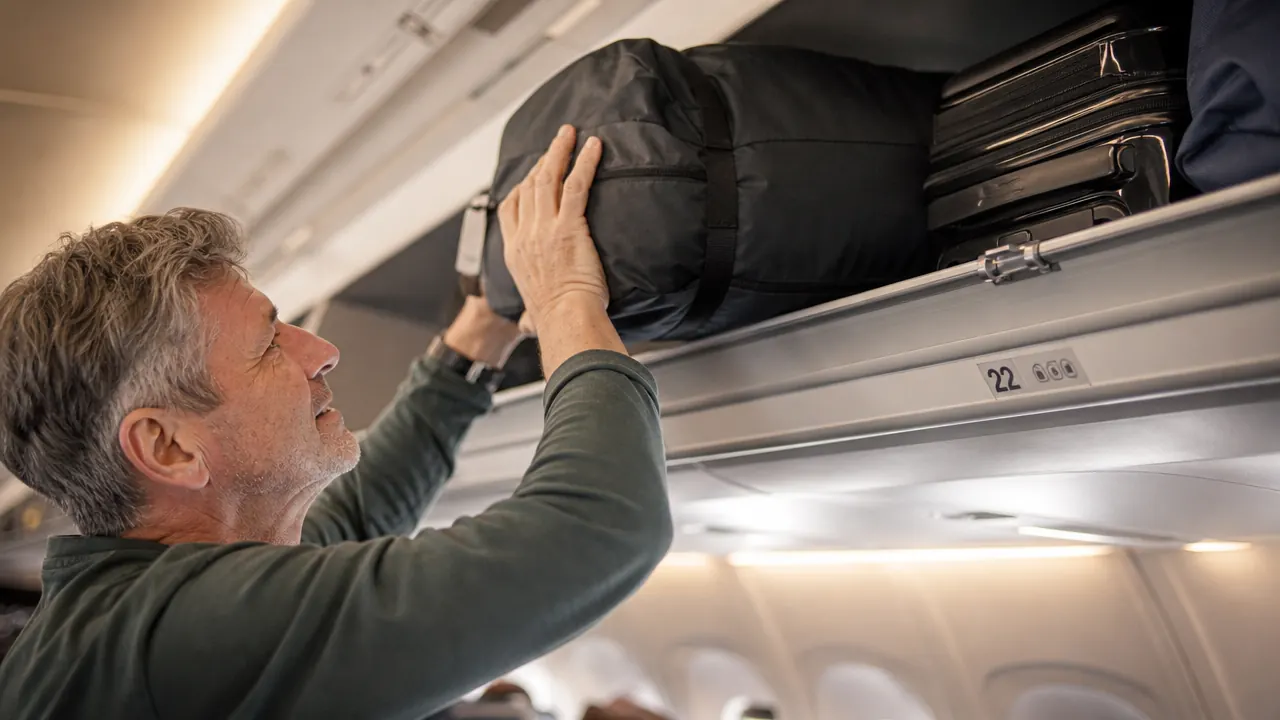
Every airline has a carry-on size limit and most have a weight limit for overhead bags, though enforcement varies. The Gonex large duffel packed full runs roughly 21 by 14 by 9 inches, which clears the most common domestic overhead standard of 22 by 14 by 9 inches. For international flights, check your specific carrier because European budget airlines like Ryanair and EasyJet have stricter limits and charge hard fees for oversize bags at the gate.
Pick the bag up and hold it by the shoulder strap for ten seconds. If it feels heavy enough to make you reconsider, something needs to come out. My personal ceiling for a four-day carry-on is 15 pounds. That gives you a comfortable overhead lift and doesn't wreck your shoulder on the transit walk. Weigh it with a luggage scale if you're not sure. You'd rather pull out a pair of pants at home than get flagged at the gate and have to check it anyway.
The last thing I always do before I zip is a pocket audit. Front pocket: passport, boarding pass, toiletry quart bag, phone cable, earbuds. Shoe compartment: one pair of shoes. Main compartment: rolled clothing, laptop sleeve if applicable, one small pouch for any extras. If every pocket has a clear job and nothing is loose in the main cavity, the bag is packed right. If you're pawing through a pile to find your charger, repack it. A well-organized duffel takes less than three minutes to unpack at a hotel, and that matters after a long travel day.
What Else Helps
The system above gets you most of the way there, but a few habits lock it in over time. First, build a master packing list in Notes on your phone and update it after every trip. Add items you wished you'd had. Remove items you didn't touch. After three or four trips, the list stabilizes into something close to perfect for your specific travel style. Second, do a trial pack the night before, not the morning of. Packing pressure the morning of a flight is where bad decisions happen, like grabbing a full-size bottle of face wash and hoping security won't notice. Third, wear your bulkiest layer onto the plane. The jacket, the thick-soled shoes, the heavy sweater. Wear them on your body and leave that volume for your duffel. It sounds obvious, but people consistently forget it when they're running late.
You've got the system. The Gonex gives you the bag that makes it work.
The separate shoe compartment keeps rubber and dirt off your clothes. The 40-liter main cavity handles a full four-day clothing stack. The whole bag collapses into its own pocket when you're headed home light. Check today's price and see why nearly 14,000 travelers keep it in regular rotation.
Amazon Check Today's Price on Amazon →