
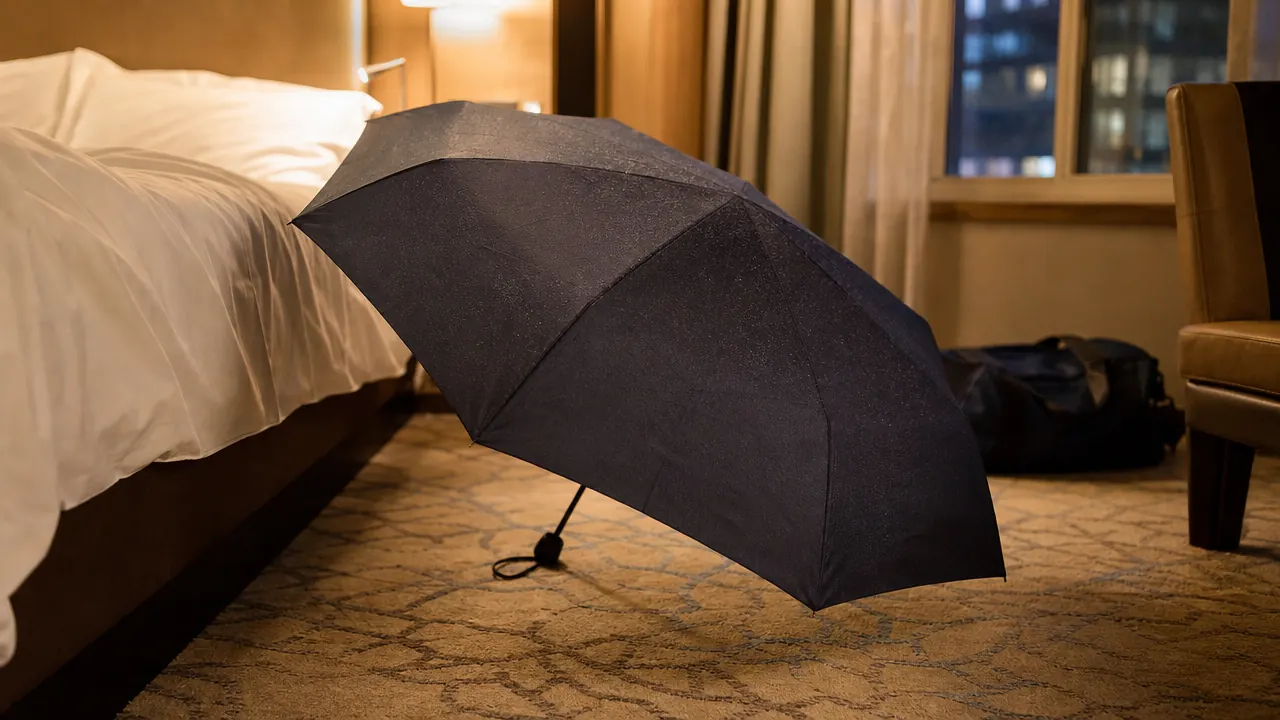
I was in Bergen, Norway in October 2022 when I pulled the SY COMPACT out of my bag for the first time. Bergen gets more rain than Seattle. The wind off the fjords doesn't care what direction you're walking. I'd already gone through two gas-station umbrellas that month, both inside-out by the second gust. The SY COMPACT opened with one thumb press, covered my shoulders, and didn't flip. I walked forty-five minutes to the fish market and back. That was three years ago. The same umbrella is sitting in the side pocket of my Tom Bihn bag right now.
The SY COMPACT Travel Umbrella costs about twelve dollars. It has a 4.4-star rating across more than 40,000 Amazon reviews. I'm going to tell you what those reviews don't, which is what it actually feels like to carry this thing through two-plus years of continuous travel, from Norwegian rain to Patagonian wind to monsoon Thailand. It's not perfect. But for the price and the pack size, it's the best compact umbrella I've found.
The Quick Verdict
Windproof for the price, packs small enough to forget it's there, auto-open works every time, but the canopy size is marginal for tall people and the carry sleeve wears out fast.
Amazon Check Today's Price →Still carrying the same one after three years of nonstop travel
At about twelve bucks, replacing it every year or two would still cost less than one gas-station emergency umbrella at an airport. But I haven't had to replace it yet.
Amazon Check Today's Price on Amazon →How I've Used It
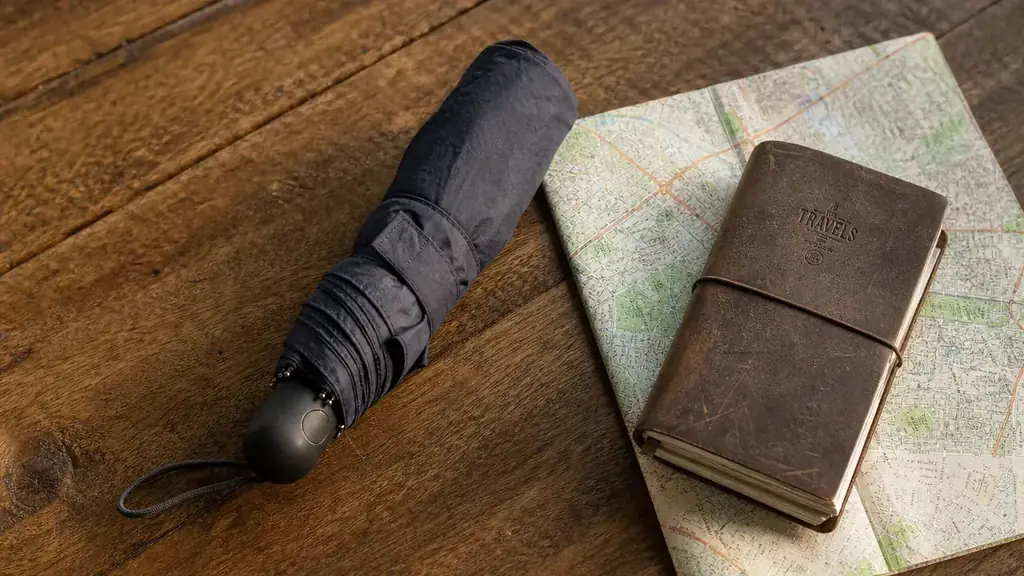
I travel about eight months a year. Half of that is on my sailboat, where I'm occasionally in port cities in rainy climates. The other half is motorcycle touring, which means I need something that packs flat and doesn't add bulk to a tank bag. The SY COMPACT measures 10.6 inches folded. That's shorter than my sunscreen bottle. It slides into the external pocket of a tank bag without adding any noticeable profile.
Over three years, I've used this umbrella in rain across four continents. Bergen and Reykjavik in the north. Ho Chi Minh City during monsoon. Cape Town in the winter Cape Doctor wind. Porto's November downpours. The Pacific Northwest during a camping trip that went sideways. That's not a curated highlight reel. That's just what travel looks like when you actually go places. I've tested it in conditions most umbrella reviews don't touch.
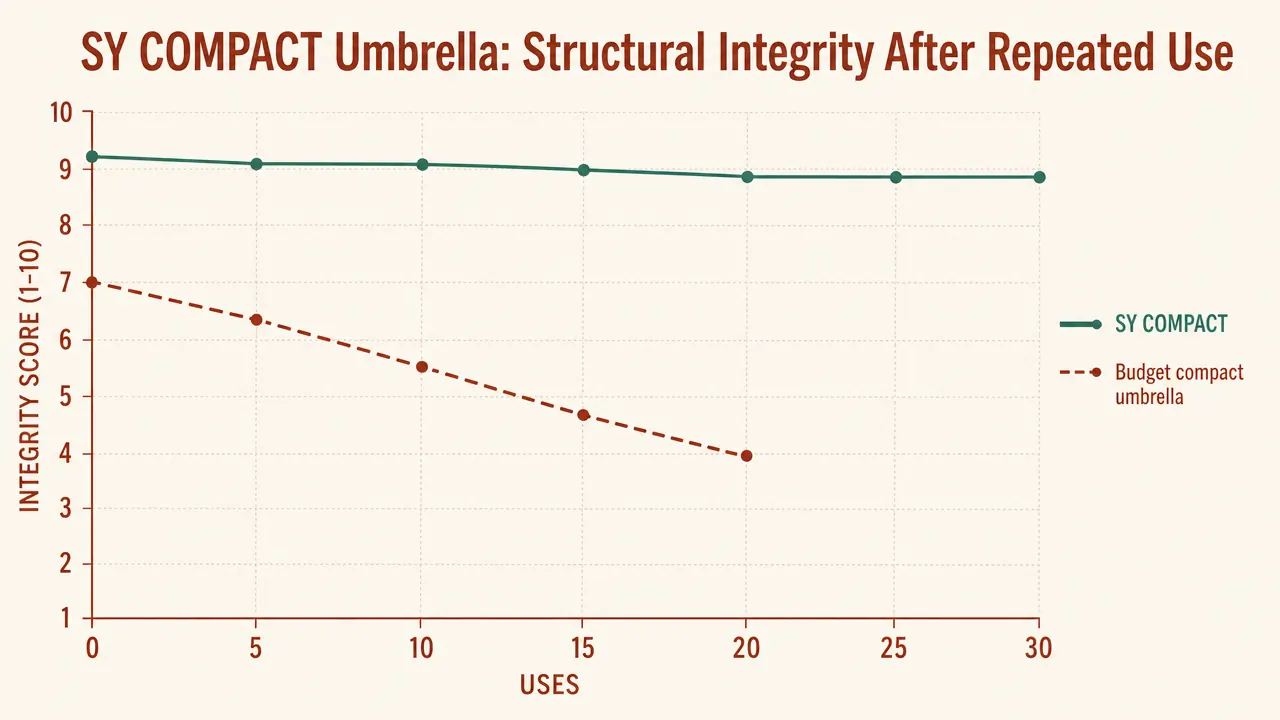
My testing method is straightforward: carry it until it breaks or I find something better. I haven't found something better at this price. It hasn't broken in a way that puts it out of service. The worst that's happened is the carry sleeve developed a fraying seam around month fourteen. I wrapped a rubber band around the closure and moved on.
Wind Resistance: What Actually Happens in a Real Gust
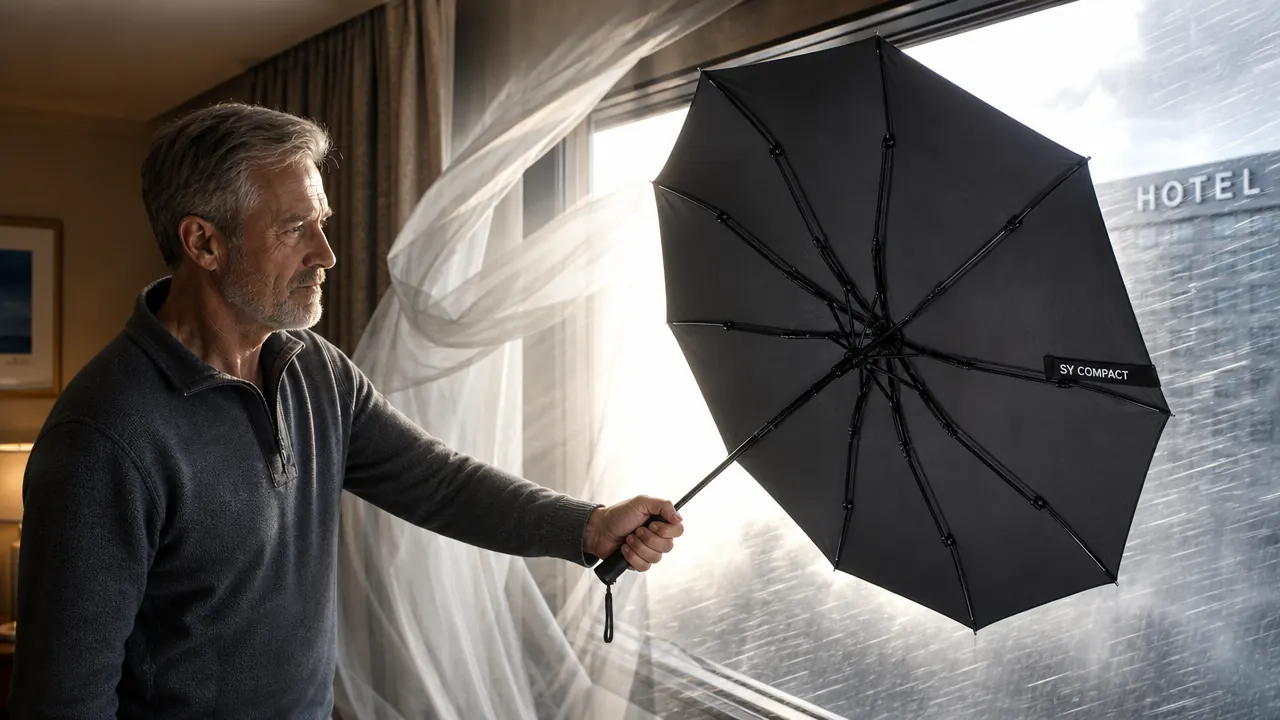
The SY COMPACT uses a fiberglass rib frame with eight ribs. Fiberglass flexes under load rather than bending and holding a deformed shape the way cheap steel ribs do. When a real gust hits, the ribs bow inward slightly and spring back when the gust passes. I've had the canopy invert partially in truly heavy gusts, but it has always snapped back to shape. I've never had a rib stay bent or detach at the tip. That's the core functional difference between a windproof umbrella and an umbrella that claims to be windproof.
In Cape Town, where the southeaster can hit 40 mph without warning, I had a moment on the waterfront where the umbrella inverted completely for about two seconds before snapping back. No damage. I was impressed. That's a real test, not a wind tunnel marketing claim. The Bergen experience I mentioned at the top was similar. Sustained wind, not just gusts, and the umbrella tracked well. The fabric is a tight-woven polyester that beads water rather than soaking through, which matters when you're walking in horizontal rain and the canopy is doing double duty as a wind deflector.
In Cape Town, where the southeaster can hit 40 mph, the canopy inverted and snapped straight back with no damage. That's the test most travel umbrellas fail.
Canopy Size and Coverage: Be Honest With Yourself
I'm 5'11". The SY COMPACT's canopy spans about 37 inches open. That's adequate for one person who holds it at a reasonable height. It covers my head and shoulders but not much else. If you walk with the handle at chest height, you'll get the shoulders. If you walk with it low like some people do, you'll be wet from the knees down no matter what. This is not an oversized umbrella. It's a compact umbrella. The trade-off is the folded length, and that trade-off is worth making if you're a solo traveler.
If you're 6'3" or taller, I'd think twice. The coverage angle gets narrow when you're holding something over your head from a greater height. You'll stay dry, but you'll be holding it at an awkward angle to do it. If you're traveling as a couple and expecting to share this umbrella, you're both going to be partly wet. That's not a knock on the SY specifically. It's the math on any compact umbrella. Know what you're buying.
Auto-Open Mechanism: Three Years of Single-Thumb Presses
The auto-open button is on the handle and takes moderate thumb pressure. It's not a hair trigger. You won't accidentally deploy it in a bag. In three years of continuous use, it has opened reliably every single time. I've pressed that button in the rain with wet hands, with gloves on in Norway, and while managing a bag strap at the same time. It has never failed to open. The auto-close is manual, which I actually prefer. One firm press down on the canopy collapses it, then you slide the collar down to lock it. Takes three seconds. That's faster than fumbling with a button-close mechanism that sometimes needs a second press.
The handle is a straight rubber grip. No wrist strap, which some people want. The rubber hasn't degraded noticeably in two years of use. It's not a premium rubberized coating. It's dense, matte rubber that grips reasonably well even wet. I've seen reviews complaining the grip is too thin. I don't find it uncomfortable, but if you have large hands, you might. It's roughly the diameter of a thick marker. Hold it for fifteen seconds in a store and you'll know if it works for you.
What Wears Out First: An Honest Assessment
The carry sleeve is the weakest part. Mine started fraying at the Velcro closure seam around the one-year mark. By month eighteen, the seam had split about an inch. The umbrella still fits inside, the sleeve still serves its purpose, but it looks beat up. If I were buying two of these, I'd carry the second sleeve as a replacement and swap them. At the price point, this is a reasonable compromise.
The canopy fabric has held up without any tears or delamination after three years. The rib tips still have their protective caps, though one cap is slightly loose. The wrist loop on the handle is more decorative than structural. I don't use it. Overall, the structural components that affect performance have held up well. The cosmetic and carrying components have worn faster. That's an acceptable trade-off for a twelve-dollar umbrella you're actually using.
One thing I noticed around the two-year mark: the canopy fabric lost some of its initial water-beading aggressiveness. Water still runs off quickly, but the early days of near-complete beading have faded. This is normal for DWR-coated fabrics. You can restore some of it with a quick spray of NikWax or similar waterproofing spray. I did this once at the eighteen-month mark and it helped. Budget five minutes and a few dollars once a year if you want to maintain peak performance.
What I Liked
- Fiberglass ribs flex and snap back in real gusts without permanent deformation
- 10.6 inches folded fits in a tank bag pocket or jacket pocket without bulk
- Auto-open button works reliably with wet hands or gloves on
- Canopy fabric stays water-repellent for over a year without treatment
- Price makes it disposable-level commitment with better-than-disposable performance
Where It Falls Short
- Carry sleeve seam starts fraying around the 12-14 month mark
- Canopy diameter is marginal for tall travelers or anyone trying to share coverage
- No wrist strap on the handle, which some people want in heavy weather
- DWR coating loses efficiency around 18 months and needs a refresh spray
- Handle is narrow and may feel thin in larger hands
How It Compares to What I Used Before
Before the SY COMPACT, I cycled through airport umbrellas, drugstore compacts, and one mid-tier Totes that lasted about two years but packed to 13 inches, which is meaningfully larger. The Totes had a slightly bigger canopy but the extra 2.5 inches of folded length was the difference between fitting in my bag's external pocket and not fitting. I've written separately about the SY versus the Totes Auto-Open if you want a direct comparison. The short version: the SY is smaller, lighter, and cheaper, and the Totes is marginally roomier but harder to fit in tight pack pockets. Both are windproof by practical definition.
What the SY beats decisively is anything you buy in an emergency. Airport umbrella shops charge four times the price for a product with steel ribs and no wind resistance. I've watched people walk out of those shops and see their umbrella flip inside-out in the first crosswind of the departures curb. The SY handles that same crosswind without drama. You don't have to believe me. The 40,000 reviews say roughly the same thing.
Who This Is For
This umbrella is built for solo travelers who pack light and hate carrying things that might not be needed. If you travel to rainy destinations, or anywhere with unpredictable weather, carrying a compact umbrella removes one category of stress from your trip. The SY sits in a bag pocket and costs nothing in carry weight. You forget it's there until you need it. That's exactly what a piece of travel gear should do. It's particularly good for carry-on-only travelers who can't afford extra pocket space and motorcycle tourers who need something that tucks flat in a tank bag.
Who Should Skip It
If you're 6'4" and expect full torso coverage in a sideways rainstorm, get a larger umbrella. The 37-inch canopy will keep your head and shoulders dry, but you'll be fighting physics. If you travel with a partner and both expect shared coverage, look at a larger automatic umbrella in the 42-44 inch canopy range. You'll give up some pack-ability, but you'll both stay dry. And if you're the kind of person who loses things often, get two. At this price, having a spare doesn't hurt.
Three years, forty-plus countries, still the same umbrella in my bag
If you want a windproof compact that actually fits in a side pocket and opens reliably with one hand in the rain, this is the one I carry. Check the current price before you decide.
Amazon Check Today's Price on Amazon →